Before we get into the album, let me give you the thirty-second version of who Ghais Guevara actually is, because if you don’t know him, this record is going to feel like walking into a movie after the second act.
Jaja Gha’is Robinson was born October 9, 2000 in Philadelphia. He first surfaced online in 2019 under the name Jaja00, and the Ghais Guevara alias came later with a sharper ideological point of view attached to it. His 2021 tape BlackBolshevik is what put him on the map broadly, landing on Rate Your Music’s year-end list and pulling in a committed audience almost entirely through word of mouth. From there the project snowballed. There Will Be No Super-Slave in 2022 earned him praise from Anthony Fantano and pulled major press from Complex, Vice, and Pigeons and Planes. Vice called him “the only rapper doing geopolitical communist rap,” which honestly undersells how strange and specific his whole operation is. He grew up in North Philly around guns, gang dynamics, and generational radical Black leftist thought. That tension between street-level survival and high-theory ideology is basically the entire engine of his music. He reads Deleuze seriously. He raps about it seriously. And somehow, instead of that combination feeling pretentious, it feels urgent.
He eventually adopted a third alias in Goyard Ibn Said, and began building what feels less like a discography and more like a mythology. Which brings us to the album.
What Is a Kayfabe and Why Does It Matter

Sgt. Slaughter and The Grand Wizard, both wrestling characters
If you follow professional wrestling, you already know the word. Kayfabe is the practice of maintaining the fictional reality of wrestling in public, treating the staged drama as if it were real. When a heel attacks a face at a press conference, everyone stays in character. The fiction becomes the function. The performance replaces truth so thoroughly that pointing out the performance becomes the taboo, not the lie itself.
Ghais uses that concept as the centerpiece of this entire record, and once you clock what he’s doing with it, every track starts hitting differently. The Kayfabe in his world is the social order, specifically the manufactured consensus that obscures who holds power and how they got it. Jouissance, the album’s antagonist and the title of Track 3, is the wealthy architect of that illusion. He attends universities that “steamroll and displace the locals,” feigns cultural fluency while extracting from communities he has no real stake in. He is not a cartoon villain. He is a recognizable type.
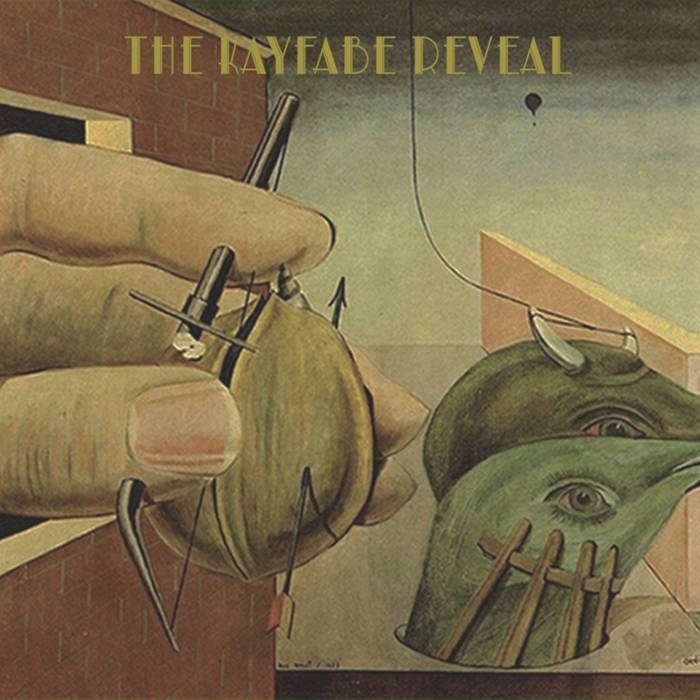
The Kayfabe Reveal of the album’s title is the moment that illusion cracks open in public. What follows is not liberation, at least not cleanly. What follows is war, grief, and an uncertain aftermath. Ghais is not interested in triumphant revolutions. He is interested in the wreckage they leave behind and what, if anything, survives.
The Philosophical Architecture
This is where I want to spend some real time, because the album is dense with theory and understanding the references is not optional if you want to get at what Ghais is actually arguing.
The Prologue opens with a passage from Bruce Fink’s reading of Lacan, specifically about jouissance, the Lacanian concept of a kind of enjoyment that exceeds pleasure, that is bound up in language and in the Other. Naming the antagonist Jouissance is a deliberate philosophical move. In Lacanian theory, jouissance is tied to excess, to a surplus enjoyment that the system produces but cannot fully contain. The wealthy class here does not simply have money. They have jouissance, a structural position of excess that the social order is organized around protecting. The ruling class maintains itself not only through force but through the population’s own complicated attachment to the system. Track 3 makes this explicit: “we gon’ still sport his logo / Dopamine craved, enslaved, fightin’ FOMO.” The oppression works partly because people are getting something out of it, even something small, even something unhealthy. That is the Kayfabe. Everyone knows at some level it is a performance, but the performance keeps going because opting out feels worse than participating.
The Prologue also does something formally sophisticated. Goyard as narrator warns us that the recollection spills “from a memory that cannot be trusted.” He is not offering objective history. He is offering one truth, shaped by grief and guilt and the chaos of what he witnessed. That admission invites the listener to stay critical of the narrative even while being drawn into it. For a hip-hop concept record that is a genuinely advanced formal gesture.
Deleuze and Guattari appear twice, both times through Anti-Oedipus, and their argument about psychoanalysis and capitalism is doing heavy lifting throughout. Their central claim is that Freudian psychoanalysis, particularly through the Oedipal structure, actually serves capitalist repression by reducing social desires to family-coded neurosis. Ghais cites this to indict the transplants and colonizers who show up in Goyard’s city, who “feign an understanding of the nature of things here” while projecting their own psychological frameworks onto people they refuse to actually see. The line “how can we understand those who claim to have discovered an Indian Oedipus or an African Oedipus” is Deleuze and Guattari almost verbatim, and in context it lands like a gut punch.
Then there is Nietzsche, specifically ressentiment, which becomes the album’s title track and moral heart. Ressentiment in Nietzsche’s framework is the reactive hatred of the powerless: the way those who cannot act out their will directly instead construct moral systems that frame the powerful as evil and themselves as virtuous by passivity alone. The sheep that says “I would never pluck the lamb from the ground.” On the surface that sounds like a critique of the oppressed, but Ghais is doing something more layered. He is examining how ressentiment operates on every level of the conflict, including within the revolutionary movement itself. After the battle, Jouissance bleeds ressentiment into the surrounding environment, infecting neighboring spaces, causing infighting among people who were supposed to be fighting together. The revolution does not simply defeat ressentiment. It spreads it.
Jouissance, The Wealthy: Portrait of a Villain Who Wears Dior
Track 3 is one of the most interesting villain introductions on a rap album in years. Jouissance is drawn with enough specificity to feel like a composite of real historical figures rather than a cartoon bad guy. He has “a fetish for crumbling empires.” His crown has Congolese fingerprints on it. He stocks Big Pharma. He cooperates with the NYPD. His cultural aesthetic gets borrowed and imitated by people who owe him nothing: “a line of betas tryna get like him, swear he’s got plenty.”
The reference to the “Antwerp 6 Gods” is a sharp specific touch. The Antwerp Six were the Belgian avant-garde fashion designers who defined high fashion in the 1980s. Ghais is pointing out that Jouissance’s taste, his aesthetic sophistication, his connections to the fashion world, none of that makes him less predatory. In the album’s logic, it actually makes him more dangerous because it makes him culturally legible to people who should know better. You cannot fight what you still want to imitate
The Protagonist’s Arc: Anti-Hero to Soldier
Tracks 4 through 6 develop Goyard as a protagonist, and Ghais is smart enough not to make him clean. “Anti-Hero” introduces a character formed by domestic violence, poverty, emotional unavailability, and survival instincts that served him in the neighborhood but do not translate cleanly into intimacy or politics. The line about “developing how to mask all those intense feelings / so I could finally bag that baddie in the True Religion” is genuinely funny in a sad way. He learned emotional suppression as a survival mechanism and then had to figure out how to unlearn it just to date someone. That is a very specific kind of damage.
“History of Violence” goes further back and further into the bone. The scene of a child taking boiling water upstairs carefully, afraid to spill it, because of what happens if he makes a wrong move downstairs is one of the more vivid images of poverty and domestic stress I have encountered in a lyric in a long time. Goyard was not born angry and guarded. He learned it, in specific rooms, from specific incidents. This track functions as the backstory that makes his later revolutionary impulse feel earned rather than ideological. He has personal reasons to want the system dismantled that have nothing to do with theory.
“Performative,” which closes out this developmental stretch, pivots toward something sharper. It is about the performance of masculinity, about navigating male social spaces where any sign of emotional growth gets read as weakness. Goyard has been in proximity to men who hate women while complaining to him about women, and he is exhausted by it. The song title is doing real work: everyone around him is performing something. His choice to be emotionally honest becomes its own kind of radical act in a context where authenticity is coded as vulnerability. The Andrew Tate shirt reference is pointed and darkly funny in the way only genuine contempt can be funny.
This character development matters because when Goyard eventually enters the revolutionary war in “Battle of Ressentiment,” he is not arriving as a clean moral agent. He is a person carrying enormous unresolved pain who chooses to fight because the alternative is quieter but slower destruction. That is a more honest portrait of how people actually end up in political conflict than most concept albums manage.
“Your Getaway” and The Temple: The Album’s Strange Heart
Track 7 functions as what Ghais calls in his screenplay an “ad break,” a pitch for a place called The Temple that will become the album’s final image of hope. But the advertisement is weird and politically loaded. The verse is about people desperate for escape who cannot access the same escapes as everyone else. Boiler Rooms welcoming fascist-leaning incidentals. Travel bans cutting off people from Afghanistan and Somalia and Libya from even the option of leaving. Goyard is advertising a party that not everyone can get into, not because of the party’s rules but because of whose passport they hold.
The Nietzsche-inflected outro about ressentiment as disguised hatred is the interpretive key to the whole track. The man of ressentiment, Nietzsche argues in Genealogy of Morality, has to make misfortune into someone’s fault. He cannot absorb loss and move through it. He has to distribute blame, find the responsible party, recriminate. Ghais sets this up as the psychological opposite of what The Temple represents. The Temple is where people go who are done with ressentiment, who want something generative rather than reactive. We come back to that in the Epilogue
The Kayfabe Reveal and the Philosophy of Disclosure
Track 8 is the album’s hinge point. The song opens in a “vestibule” with someone who has just heard something that changes everything she thought she knew. “Turned coitus to confessional” is one of the better lines on the album full stop. Vulnerability and sexual intimacy collapse into the same moment, and what gets revealed destabilizes the relationship completely.
The political dimension runs through the second verse where Ghais references the Kuomintang and the defense of a city against “Yakubians,” a term from Nation of Islam theology. Whether or not you take the NOI cosmology seriously, the way it functions here is as a metaphor for the sudden clarity when you recognize that someone has been lying to you, that the social contract was always more beneficial to them than to you. The Reveal is traumatic precisely because the Kayfabe was comfortable.
The outro audio clip of someone discussing a regime change operation around Maduro’s removal in Venezuela grounds this metaphysical framework in a real-world event. The “reveal” is not just personal. People operate inside managed fictions all the time on the geopolitical level until someone tips the structure and the reality underneath becomes undeniable. Ghais is blurring the line between his fictional city-state and actual documented history, and that blur is the point.
The Audio Clips as Structural Argument
Worth pausing on: the interludes and audio clips throughout the album are not decoration. They do specific argumentative work.
Track 9, “Ancestral Ties,” closes with news footage from the MOVE bombing in Philadelphia, 1985, when police dropped a bomb on a residential neighborhood, killing eleven people including five children, and burning down sixty-two homes. It is presented without commentary. Ghais just lets it sit there after a track about intergenerational inheritance and the whispers inside certain dances and the ancestral knowledge that lives in the body. The ancestors being invoked in the song are not abstract. They are people who were murdered by the city itself. The revolutionary impulse in this album is not theoretical. It has a specific address.
Ressentiment as Political Force: The Album’s Central Argument
The album’s biggest intellectual claim, running from the Prologue all the way to “Manufacturing Lack,” is that ressentiment is the engine of the political conflict at its center. After the Kayfabe Reveal, Jouissance’s wounds bleed into the surrounding environment. Instead of unifying against the source of the harm, people turn on each other. “Infighting ensued. Bodies of water rendered unsafe, the soil malnourished.” Ghais is describing something that looks a lot like the aftermath of every failed revolution in living memory: the external enemy is partially defeated and what fills the vacuum is internal fragmentation.
“Manufacturing Lack” traces this directly. “The chemical waste in the air makes the silhouettes of bodies in the trees look like ornaments. It seems they made the place Great Again.” That last sentence is devastating. The revolutionary project, consumed by ressentiment, reproduced the very conditions it set out to destroy. That is not pessimism exactly. It is a diagnosis. And the rest of the album is the argument about what survives it
Battle of Ressentiment and the Limits of Victory
Track 10 is the album’s most chaotic track by design, and the screenplay notes that the “losses are too vast to determine a clear victor.” Ghais closes in on Jouissance. He gets him. And it does not fix anything. The casualties are too heavy. His ensemble is gone. What he is left with is exhaustion and “disembodied memories with the disenfranchised.”
Most revolutionary narratives end with the victory moment. Ghais is more interested in what happens the morning after, when the energy that organized the resistance dissipates and people have to figure out what to do with the city they have taken back. He is also making the more uncomfortable theoretical point: Jouissance is a structural position, not just a person. The name comes from a psychoanalytic concept for a reason. You cannot shoot an abstraction
The Temple: What Survives
The Epilogue is the payoff for the ad break in Track 7. The Temple is not a utopia. Ghais describes it as a space that contains people who cannot go back, who do not entirely fit where they have landed, who are still working out what they believe. There is an Eastern European girl dancing to club music like her whiteness is an imposter. A sober woman who is the veteran of the scene. A West African woman in a trench coat that “resembles royal silhouettes.” A man who is three years past his own reckoning. None of them are healed exactly. They are just together.
The closer brings back Deleuze and Guattari’s critique of colonization and the Oedipus complex, arguing that Oedipus is not a universal human structure but a specific product of colonial imposition, a way of reducing colonized people to the only terms the colonizers recognize: the family, the drives, the manageable. The Temple is explicitly the place that escapes that reduction. “The language instrumental / Jouissance determines all end goals / but bet you get healed by the talent at the Temple.” Jouissance still operates. The system still runs. But there is a space, physical and communal and artistic, where something different is possible.
The Cormac McCarthy lines that close “Manufacturing Lack” carry the full weight of that grief and defiance together. They never sleep. They dance in war and in peace. The fighters who died do not die for a utopia they never see. They live on in the people who keep dancing
What This Album Is Actually Doing
Ghais Guevara made a twelve-track concept album that functions simultaneously as a political philosophy, a therapeutic autobiography, a revolutionary war narrative, and a genuinely odd and beautiful love letter to a city that has been bombed by its own government. He did all of that with a screenplay, with citations from Lacan and Deleuze and Nietzsche and Cormac McCarthy, with guest verses that feel genuinely chosen rather than featured for visibility, and with a narrative structure tight enough that every interlude and audio clip earns its place.
The album is also an argument about the limits of ressentiment as a motivating force. Starting a revolution out of reactive hatred produces the same poisons it was trying to cure. The only way out that Ghais can see, or at least the only one Goyard finds, is the transformation of that reactive energy into something generative. Which is what art does. Which is what the Epilogue enacts.
Right now this album exists in that specific pre-discovery zone where the people who find it feel like they found something. That window closes. It always does. So here is my strong suggestion: find it before it does. This is the kind of record you stumble on years later and realize it was always going to outlast the moment it came from. That is what the Temple is for.